Fireplace Types for Your Custom Home: Wood-Burning, Gas, and Non-Vented Options Explained
A fireplace can be the heart of a custom home, offering warmth, ambiance, and a natural gathering place for family and friends. As a custom home builder in East Tennessee, we guide clients through fireplace selections that match their lifestyle, budget, and how they will actually use the space. The main options—wood-burning, vented gas or propane, and non-vented gas—each have distinct advantages. Understanding the differences helps you choose wisely.
Wood-Burning Fireplaces: Timeless but Costly
Wood-burning fireplaces deliver unmatched authenticity with crackling flames and that classic aroma. They are, however, the most expensive option in custom home construction.
The biggest factor is the chimney. Building codes require the chimney to extend at least two feet above any portion of the structure within ten feet and three feet above the roof where it penetrates—often resulting in termination well above the roof ridge. This adds structural work, flashing, and overall expense. Wood-burning systems also require regular chimney maintenance and a supply of seasoned wood.
We recommend this style when clients specifically want the traditional experience and expect frequent use. For many families, the cost and maintenance outweigh the benefits since the fireplace is often used only occasionally.
Vented Gas and Propane Fireplaces: Clean and Convenient
Vented gas and propane fireplaces provide realistic flames with modern convenience. They ignite instantly, produce no ash, and offer remote operation. These systems require proper venting, usually through a direct-vent configuration, but the installation is simpler than a full wood-burning chimney.
Vented units are a strong choice when you want gas efficiency and the security of external venting. They integrate beautifully with custom stone, brick, or millwork surrounds and work well for homeowners who plan regular use.
Non-Vented Gas Fireplaces and Inserts: Our Most Common Recommendation
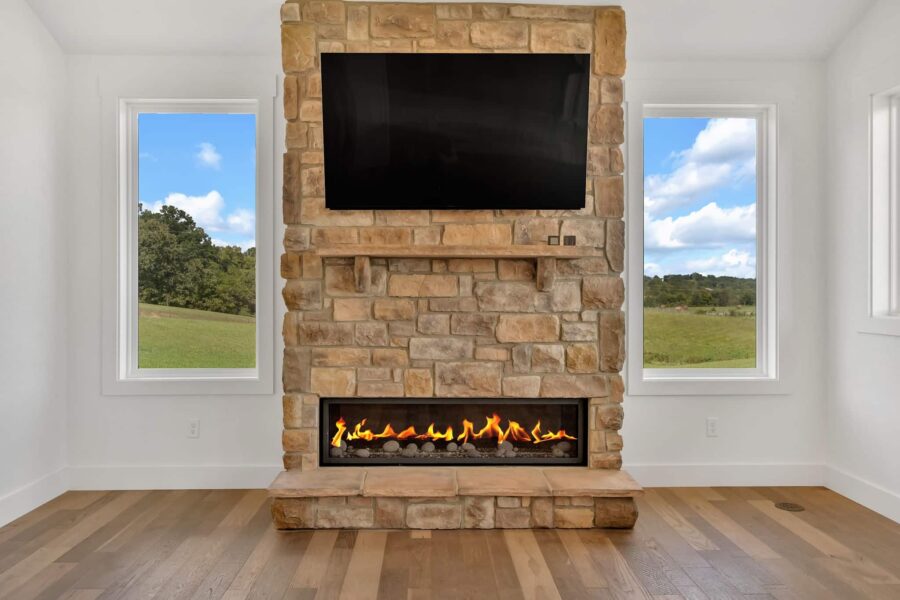
In most of our custom home projects, we use non-vented gas fireplaces—typically installed as high-quality inserts. These have become our go-to solution because they are safe and practical for how most families actually enjoy their fireplaces: primarily for ambiance on occasion rather than daily operation.
Non-vented (ventless) units require no chimney or external venting. This reduces construction complexity and cost while allowing flexible placement. They are highly efficient because nearly all the heat stays in the room. Modern units include oxygen depletion sensors for safety, and when properly sized and installed with a carbon monoxide detector, they perform reliably.
We typically use fireplace inserts because they provide better efficiency and a cleaner, more finished appearance than open masonry fireplaces. An insert allows us to create a polished custom look with mantels and surrounds that match your home’s interior finishes perfectly.
Selecting the Right Fireplace for Your Custom Home
During the design phase, we discuss several factors with our clients:
- Expected frequency of use
- Preference for wood authenticity versus gas convenience
- Budget for both installation and long-term maintenance
- Desired aesthetic and how the fireplace fits the overall design
- Any specific code or placement considerations
For the majority of our projects, non-vented gas inserts strike the best balance of safety, simplicity, beauty, and value. Wood-burning remains available for those who want the full traditional experience, and vented gas offers another solid alternative.
Create Warmth and Beauty in Your Custom Home
At Idell Construction, we believe every detail in your custom home should enhance how you live. A thoughtfully chosen fireplace does exactly that. Whether you lean toward a non-vented insert, a vented gas unit, or a classic wood-burning fireplace, we handle the planning, permitting, and expert installation so everything works beautifully from day one.
If you are planning a custom home and want personalized guidance on fireplace options, contact us today. We would be glad to help you design a space that feels warm and inviting for years to come.