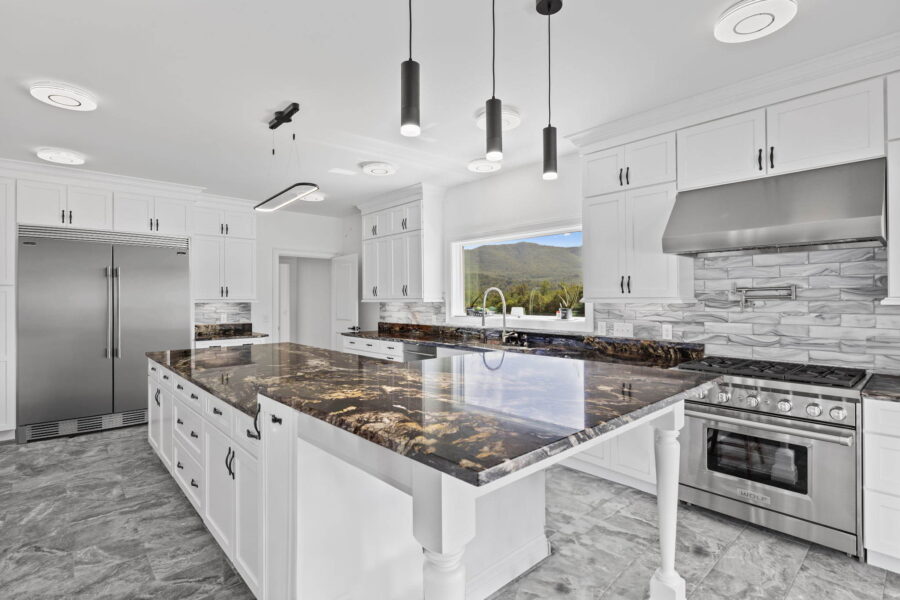
Kitchen Countertops: Options in Stone
The kitchen may be the most complex room in a home. Cabinets, appliances, plumbing fixtures, lighting, etc.: a kitchen is a fusion of details. Each aspect is in and of itself a blend of beauty, functionality, and resilience, all working together to create a cohesive whole, and versatile for situations ranging from midnight snacking to hosting parties.
A key feature of every kitchen is its countertops. Not only is this a work surface, it is a locus of gathering and often defines the flow of a kitchen. Stone is the optimal choice for balancing both the durable functionality of this work space and the aesthetic beauty of this focal point of family life. But what options are there in Stone, and what is the best choice for you? Let’s consider the pros and cons of the following options: Granite, Marble, Quartz, and Quartzite.
The Timelessness of Granite
A natural stone, Granite is incredibly durable. It is highly resistant to heat, scratches, and chips, and, when properly sealed, to stains. Many homeowners gravitate toward Granite due to its naturally unique aesthetic as no two slabs are alike, each consisting of its own array of veining and flecks.
Despite its durability, Granite is porous and requires periodic sealing. It is recommended to reseal this surface annually to maintain its stain resistance. It is also important to know that sharp impacts can cause chipping.
Granite can be found in a variety of colors, from subtle whites and grays to vibrant blues, greens, and reds, often with intricate patterns and speckles. Expect to pay $40 to $100+ per square foot, installed. Various factors, such as rarity, color, and slab thickness, determine pricing.
The Elegance of Marble
Marble is renowned for its classic beauty, characterized by elegant veining and a smooth, cool surface. Typically associated with stunning whites and grays, Marble also boasts an array of eye-catching options that consist of greens, blacks, and pinks.
One significant difference between Marble and Granite is that Marble is a softer, more porous stone. This leaves it more susceptible to scratches, etching from acidic substances (like lemon juice or vinegar), and staining if not carefully sealed on a regular basis.
Marble typically ranges from $50 to $150+ per square foot, installed. Rare varieties will incur higher prices.
The Versatility of Quartz
Quartz is an engineered stone. It is a blend of about 90-95% natural quartz minerals and resins. This composition makes it non-porous, meaning it never needs sealing and is highly resistant to stains, scratches, and bacteria. As a manufactured product, Quartz allows for a wide range of colors, patterns, and finishes. These options can include mimicking actual stone or offering a more consistent color if a uniform look is desired.
It is important to know that Quartz is not as heat-resistant as Granite or Quartzite. Excessive heat can damage the resins in Quartz, potentially leading to discoloration or warping, and prolonged exposure to direct sunlight can also cause some colors to fade.
Expect to pay $50 to $120+ per square foot, installed. The complexity of the chosen pattern or certain brands may significantly impact pricing.
The Durability of Quartzite
Quartzite is a naturally occurring rock formed from sandstone and is often mistaken for the engineered product Quartz. It is highly durable, resisting scratches, heat, and UV light. Quartzite is typically lighter in color featuring whites, grays, and beiges with a wide variety of veining spanning blues, greens, and pinks found in natural mineral impurities. Like Granite, Quartzite is porous and requires proper sealing to prevent staining.
Being a very hard material, quartzite is challenging to cut and fabricate. It generally falls in a higher price range, from $60 to $150+ per square foot, installed.
Installation
Not only do these stone countertop options require professional installation due to their weight, they also necessitate specialized tools and technical precision for cutting. Before cutting begins, a specially trained technician will come by the site to create digital templates for the cutting team based on cabinetry, room layout, overhangs, and plumbing fixtures to ensure a perfect fit during installation.
If an overhang is desired for seating at an island or peninsula, additional structural support may be necessary to prevent cracking. The depth of this overhang is dependent on your stone choice and structural support options. Be sure to discuss the limitations of the various stone choices with regard to overhang depth and ways to support your desired overhang before finalizing your stone choice.
A kitchen is often the central element in a home and a versatile space of day-to-day living, sharing, and wowing. Here at Idell Construction, we know that designing your ideal kitchen involves several choices that need to ultimately work together into a space that is beautiful, functional, and enduring. With over 30 years of experience, our team can help you turn your kitchen dreams into a reality. Call us today to discuss how we can guide you in the next steps of your project.