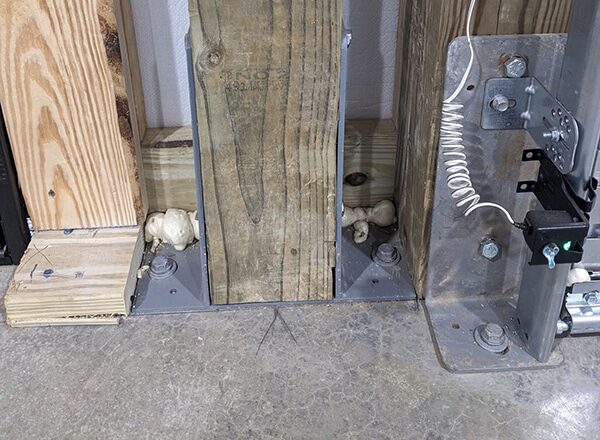
The Superior Choice: Turn-Down Slab Foundations with Attached Posts for Your Metal Building
As a leading metal shop builder in Greeneville, Tennessee, Idell Construction is committed to providing durable, efficient, and customized building solutions. Whether you’re looking for a farm equipment storage building, a custom garage builder in TN, or an agricultural building contractor, understanding the foundation options is crucial. Today, we’ll explore why opting for posts at the top of a turn-down slab offers significant advantages over traditional posts embedded in the ground with a slab-on-grade inside the building.
Understanding the Two Foundation Methods
A turn-down slab foundation, also known as a monolithic slab with turned-down edges, integrates the floor and footings into a single pour. The edges are thickened and extended downward to provide stability, and the building’s structural posts are securely bolted or bracketed to the top of this slab. This method is widely used for metal buildings due to its strength and simplicity.
A turndown slab and a monolithic slab are usually the same foundation. “Monolithic” means the floor and footing go in as one pour. “Turndown” describes the thickened edge that turns down into the ground and acts as the footing. The real comparison is a two-pour foundation, with footings first and the floor slab later.
Turndown (Monolithic) Slab vs. Two-Pour Footing and Slab
- Turndown / monolithic: the floor and footings are poured together in one pour, with no joint between floor and footing. This is the foundation this post is about, with the posts attached on top.
- Two-pour (footing, stem wall, then slab): the footings and walls go in first, and the floor slab is poured inside later. It’s common when the grade steps or a crawl space is involved. For homes, see slab vs. crawl space vs. basement for a home.
- Posts in the ground plus a floating slab: the traditional pole barn method, covered below.
On the other hand, the traditional pole barn approach involves digging holes and embedding posts directly into the ground, often encased in concrete for added support. Once the posts are set, the walls and roof are attached, and a separate slab-on-grade is poured inside the structure to form the floor.
While both methods have their place, particularly in agricultural settings, the turn-down slab with attached posts stands out for several key reasons, especially for modern applications such as workshops, garages, and commercial spaces.
Key Advantages of Turn-Down Slab with Attached Posts
Superior Protection Against Rot and Corrosion
When posts are buried in the ground, they are exposed to constant moisture, soil acids, and pests, leading to rot in wooden posts or corrosion in metal ones. This can compromise the entire structure over time. By attaching posts to the top of the turn-down slab, they stay above grade, dramatically reducing these risks. As barn builders in Greeneville, we’ve seen how this extends the life of buildings in our humid climate.
Enhanced Structural Stability
A turn-down slab distributes the building’s weight evenly across a large area, minimizing differential settlement in which parts of the foundation sink at different rates. Embedded posts, however, can shift independently if the soil around them moves, potentially causing cracks or leans. Even load distribution is vital for heavy-use structures such as commercial or farm equipment storage buildings.
Better Insulation Opportunities
Insulating a building is easier with a turn-down slab. You can place rigid foam insulation beneath the concrete, creating an energy-efficient barrier against ground cold. This is particularly beneficial for an insulated metal building, where maintaining comfortable temperatures is essential. In contrast, slab-on-grade floors in pole barns are harder to insulate effectively, leading to higher energy bills.
Simplified Maintenance and Inspections
With posts elevated on the slab, accessing them for inspections is straightforward. You can spot issues early without digging, making maintenance proactive rather than reactive. This advantage is appreciated by our clients who use us as their workshop builder in Tennessee or as their detached garage contractor.
Improved Crack Resistance and Durability
Turn-down slabs can be reinforced with rebar or post-tension cables, providing excellent resistance to cracking from soil expansion or contraction. Pole barns rely more on the individual post footings, which may not offer the same uniform strength.
Greater Design Flexibility
This foundation allows for easy integration of utilities like plumbing, electrical, and heating systems within the slab. It’s ideal for custom designs, such as specialized storage. As a custom garage builder in TN, we leverage this flexibility to create tailored solutions that meet specific needs.
Compliance with Building Codes and Higher Resale Value
We build every shop and garage to pass its required inspections, and a turn-down slab gives it a finished, permanent concrete floor tied into the foundation. That’s a plus when you use, maintain, or someday sell the property.
Real-World Benefits for Your Project
Picture a durable farm equipment storage building that withstands Tennessee’s weather without foundation worries, or an insulated metal building serving as a cozy workshop. For agricultural building contractors like us, recommending turn-down slabs means delivering long-lasting value.
At Idell Construction, we’re your go-to experts for these advanced foundations. Whether you need barn builders in Greeneville, a commercial storage building, or a workshop, contact us today to discuss how we can build the perfect structure for you.
Turndown Slab FAQ
Is a turndown slab the same as a monolithic slab?
Usually, yes. A monolithic slab is poured all at once, and the turndown is its thickened edge that works as the footing. People use the two names for the same foundation.
What’s the difference between a turndown slab and a slab-on-grade with posts in the ground?
With a turndown slab, the posts sit on top of the concrete and stay out of the dirt. In the traditional pole barn method, posts are buried in holes and a separate slab is poured inside later, so the posts sit in damp soil.